🏭 Scale processing without losing product integrity🏭
🏭 Build a processing facility from the inside out 🏭
🏭 Create a production line for maximum output 🏭
🏭 Partner with a co-man AND retain quality & control 🏭
🏭 Master your most important asset: your inventory 🏭
🏭 Optimize your end-to-end supply chain 🏭
Cost: $95
What can I expect from GROW: Ingredient Technology
- This technical commercialization roadmap will help you build a food business that is truly scalable, profitable, and resilient by mastering the intersection of manufacturing, engineering, and supply chain management.
- You’ll receive expert-led instruction, tools, and group coaching.
- The series consists of 6 live, virtual group sessions in a concise, time-saving format.
- Through group instruction and consulting, this series taps into the expertise of leaders in processing, building a processing facility, creating a maximum-output production line, co-man (contract manufacturing) partnerships, supply chain velocity, and inventory management to put your operations on track for high-growth food manufacturing.
This is right for you if …
Your product is great in small batches, but as you increase volume, flavor, texture, and shelf life become inconsistent
One part of production is always waiting (or overwhelmed), causing bottlenecks, idle labor, and missed output targets
You can’t meet demand or expand geographically because you lack capacity—but outsourcing feels risky due to fear of losing quality, control, or margins
You’re either overproducing and discounting excess inventory or running out of stock because of poor alignment between production and demand
Cash is tied up in inventory, yet you still experience stockouts, spoilage, or expired materials
You have cross-traffic, food safety risks, frequent downtime, or constant retrofits because your space wasn’t designed for your process
Participants Say …
“Thanks to FFI’s training sessions, we’ve been able to build new tools that improve our current processes and help us reach more customers in the future.”
— Francisco Guerrero, Redwood St Roasters

Included in the Training:
- 6 live virtual workshop sessions (1.5 hrs. each)
- Presentation and Q&A with food business experts
- Tools and resources to start using immediately
Session Topics and Experts

Travis Zissu
Scale Food Labs
SESSION 1
Scaling Processing: From Batch to High-Throughput Production
Scaling a food process is rarely as simple as buying a bigger kettle or a faster belt. As production volume increases, the physics of the process change—heat transfer rates shift, ingredients behave differently under pressure, and the cost of a single error grows exponentially. For an operations leader, the goal is to increase output without sacrificing the quality or the safety that built the brand.
In this session, Travis Zissu draws on his unique perspective as both a founder and a corporate R&D leader to map out the journey of scaling processing. He addresses the critical “inflection points” where manual labor must give way to automation and where artisanal methods must be translated into standardized industrial protocols to maintain commercial viability.
You Will Learn:
- Identifying Scaling Inflection Points: Recognizing the technical and financial signals that indicate your current process is hitting its ceiling.
- Process Standardization: How to translate “chef’s knowledge” into Standard Operating Procedures (SOPs) that ensure consistency across shifts and facilities.
- Equipment Selection & Capital Planning: Navigating the trade-offs between versatile batch equipment and specialized high-throughput continuous lines.
- Managing Process Variability: Strategies for controlling the environmental and mechanical variables that can lead to batch failure at scale.
- The Founder-to-Operator Transition: Practical advice on maintaining the “soul” of the product while adopting the industrial discipline required for mass-market distribution.
“Scaling isn’t just about getting bigger; it’s about getting more precise. In a high-throughput environment, consistency is the only metric that matters for your margins.”

Speaker TBD
SESSION 2
Designing for Throughput: Building a World-Class Processing Facility
Building or expanding a food processing facility is likely the largest capital investment a food brand will ever make. It is a high-stakes project where a poorly placed floor drain or an undersized electrical panel can lead to years of operational bottlenecks and costly retrofits. A facility must be designed from the “inside out,” starting with the process flow and ending with the structure that houses it.
This session will be a masterclass on the strategic planning of food manufacturing environments. Move beyond general construction to focus on the specialized requirements of the food industry—including sanitary design, regulatory compliance (USDA/FDA/SQF), and the integration of complex mechanical systems. Learn to build a facility that isn’t just a place to work, but a competitive advantage.
You Will Learn:
- Sanitary Design & Construction: Understanding the materials and finishes (flooring, walls, ceilings) that stand up to rigorous washdown procedures and prevent microbial harborage.
- Process Flow Optimization: Designing floor plans that minimize cross-contamination risks and maximize labor efficiency by optimizing the movement of people, products, and waste.
- Utility Infrastructure: Engineering for “worst-case” demand in power, water, steam, and compressed air to ensure the facility can support both current equipment and future growth.
- The Regulatory Blueprint: Navigating the zoning, permitting, and inspection requirements specific to food and beverage production.
- Master Planning for Scale: How to design a “Phase 1” facility that can be expanded into “Phase 2” without shutting down operations.
“A food plant is a living organism. If you don’t engineer the skeleton correctly, the muscles of your operation will never function at full capacity.”
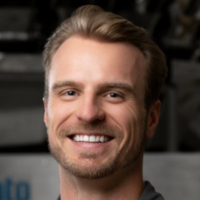
Chris Higgins
Yamato Corporation
SESSION 3
Line Integration: Engineering Your Production for Maximum OEE
Buying a piece of equipment is an event; building a production line is a discipline. The most common pitfall in scaling operations is “piecemeal engineering”—buying individual machines that don’t talk to each other, resulting in bottlenecks, excessive downtime, and wasted labor. A truly efficient production line is integrated, balanced, and designed for high Overall Equipment Effectiveness (OEE).
In this session, Chris Higgins draws on decades of experience managing large-scale food manufacturing plants to teach the fundamentals of production line design. He focuses on the “connective tissue” of the plant floor—how to synchronize the filler, the capper, and the packer to ensure a smooth, continuous flow that maximizes throughput and protects your bottom line. .
You Will Learn:
- Line Balancing & Accumulation: Learning how to identify the “bottleneck” machine and design accumulation zones to prevent a minor stop at one machine from shutting down the entire line.
- The “Vertical” Startup: Strategies for commissioning and qualifying new equipment to reach full production speed in days rather than months.
- OEE as a Management Tool: Deconstructing Availability, Performance, and Quality to identify the “hidden factory” within your existing equipment.
- Preventive vs. Predictive Maintenance: Building a mechanical reliability program that treats your production line as a high-value asset, not just a series of repair projects.
- Automation and Labor Integration: Determining the “tipping point” where automated material handling provides a clear ROI over manual intervention.
“A production line is only as fast as its slowest component. To scale, you must stop looking at individual machines and start managing the system as a whole.”

Chris Bauer
Catapult Commercialization Services
SESSION 4
The Co-Man Partnership: Outsourcing Without Losing Control
Transitioning to a Contract Manufacturer (Co-Man) is often the fastest way to scale, but it is also the moment many brands lose their grip on quality, consistency, and margin. The shift from “doing it yourself” to “managing someone else doing it” requires a fundamental change in operational mindset. You aren’t just buying capacity; you are managing a complex, multi-layered service agreement.
In this session, Chris Bauer shares the blueprints for successful external manufacturing. Drawing on his experience managing massive Co-Man networks for global brands, Chris explains how to vet the right partners, negotiate contracts that protect your interests, and build the communication loops necessary to ensure that your product is made to your exact standards every single time.
You Will Learn:
- Vetting and Selection: How to move beyond a Co-Man’s equipment list to audit their culture, safety record, and financial stability.
- The Commercial Agreement: Navigating the “Big Three” of Co-Man contracts: Toll rates, yield loss allowances, and performance guarantees.
- Operational Oversight: Implementing “shadow” quality and production tracking to ensure you have real-time visibility into your external production runs.
- Managing Supply Chain Integration: How to coordinate the flow of ingredients and packaging into a third-party facility without causing bottlenecks or waste.
- Conflict Resolution: Best practices for handling production “misses,” quality holds, and price escalations in a way that preserves the long-term partnership.
“When you move to a co-man, you are outsourcing the labor, but you are never outsourcing the responsibility. Success is built on trust, but maintained through a rigorous contract and constant communication.”

Danielle Sterling
Supply Chain & Operations Leadership
SESSION 5
Supply Chain Velocity: Managing the Flow from Plant to Shelf
A successful manufacturing run is only profitable if the finished goods reach the customer at the right time, in the right condition, and at the right cost. For growing food brands, the supply chain is often the source of “hidden” margin erosion—whether through excessive inventory holding costs, high freight spends, or retail chargebacks due to late deliveries.
In this session, Danielle Sterling draws on her extensive CPG leadership experience to demystify the mechanics of a professionalized supply chain. She focuses on building a “velocity-driven” operation that synchronizes production schedules with market demand, ensuring that your capital isn’t tied up in stagnant inventory.
You Will Learn:
- Integrated Demand Planning: How to use sales data and market trends to create more accurate production forecasts, reducing both out-of-stocks and over-production.
- Inventory Strategy & Optimization: Managing the delicate balance of “Days of Supply”—knowing how much raw material and finished goods to hold to stay agile without draining cash flow.
- Logistics & Distribution Networks: Evaluating the trade-offs between direct-to-retailer shipping, 3PL (Third-Party Logistics) partnerships, and regional warehousing.
- Cost-to-Serve Analysis: Understanding the true cost of reaching different customers and identifying opportunities to optimize freight and handling expenses.
- Supply Chain Resilience: Building “contingency logic” into your operations to maintain service levels during transportation strikes, weather events, or fuel price volatility.
“Your supply chain is the heartbeat of your business. If the product isn’t moving efficiently toward the consumer, your operational excellence on the plant floor is wasted.”

Gerry Galloway
FoodReady AI
SESSION 6
Mastering Inventory: Balancing Capital, Service, Efficiency, and Compliance
For a food business, inventory is a double-edged sword. It is your most significant current asset, yet it is also a high-risk liability that can spoil, become obsolete, or trap the cash flow needed for growth. Effective inventory management is the art of “Goldilocks” planning: having exactly enough to meet demand without over-leveraging your balance sheet.
In this session, Gerry Galloway leverages his extensive experience with large-scale food and beverage operations to teach the technical discipline of inventory control. He moves beyond simple spreadsheets to discuss the strategic systems required to manage raw materials, work-in-progress (WIP), and finished goods across a scaling enterprise.
You Will Learn:
- The Financial Impact of Inventory: Understanding how Inventory Turns and Days Sales of Inventory (DSI) directly affect your cash conversion cycle and investor attractiveness.
- Cycle Counting & Accuracy: Implementing rigorous auditing and “Wall-to-Wall” inventory protocols to eliminate the “shrinking” of margins due to administrative or physical losses.
- Safety Stock vs. Excess: Learning the formulas to determine the “right” amount of buffer stock to protect against supply chain shocks without bloating warehouse costs.
- Warehouse Management Systems (WMS): Evaluating the transition from manual tracking to digital systems for real-time visibility into lot codes, expiration dates, and FIFO (First-In, First-Out) rotation.
- Vendor Managed Inventory (VMI): Strategies for collaborating with suppliers to shift the burden of inventory holding while maintaining high service levels.
“Inventory is cash that you can’t spend yet. If you don’t manage it with extreme precision, your growth will eventually be starved by the very product you’ve worked so hard to make.”
Scholarship opportunities are available, learn more.