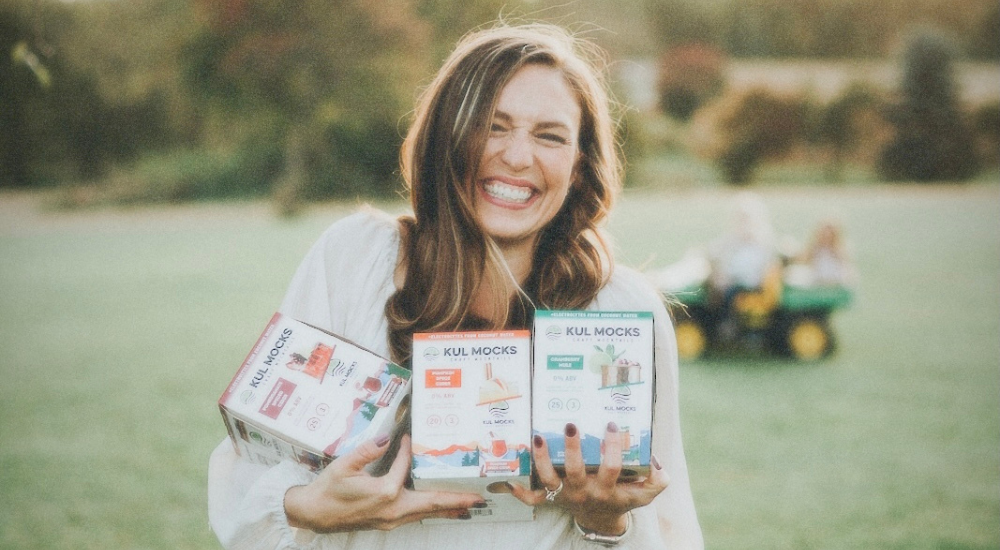
When Danielle Goss founded KUL MOCKS, she wasn’t setting out to start a national beverage brand. She was simply trying to solve a problem.
In the spring of 2019, Danielle and her husband were expecting their first child. They were a social couple, used to enjoying a cocktail with friends and family, and she didn’t want alcohol—but she did want something festive, flavorful, and adult. “At the time, it was just O’Doul’s on the shelf,” she recalls. “And that just didn’t fit the bill. A soda or bottle of water didn’t feel social.”
So Danielle spent that summer crafting her own mocktails from scratch. What started as a personal experiment quickly revealed a much larger opportunity: there were a lot more people than pregnant women looking for great‑tasting non‑alcoholic beverages.
By July 2020—after months of formulation work and business development—KUL MOCKS officially launched into an emerging category that has since exploded.
From Kitchen Creations to a National Shelf Presence
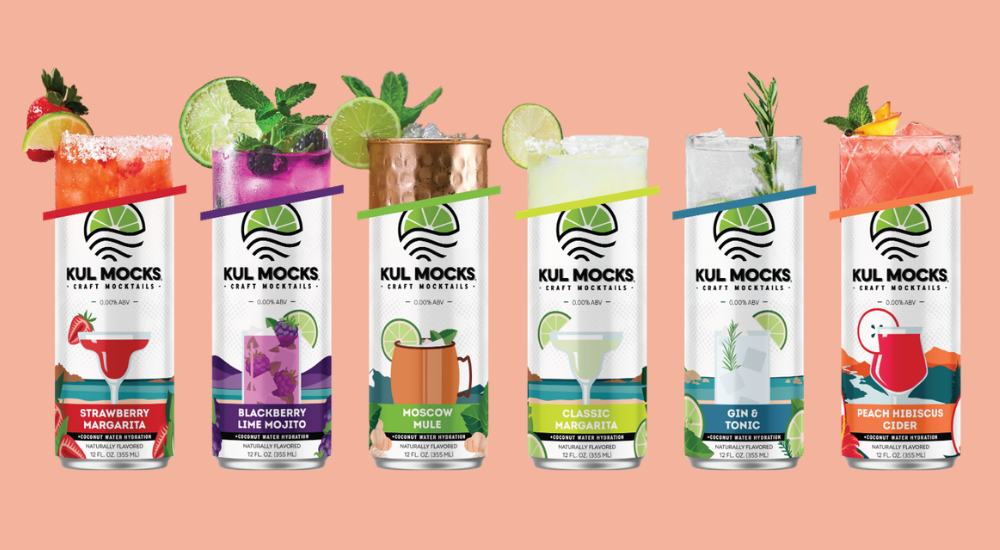
Today, KUL MOCKS is recognized as one of the healthiest ready‑to‑drink non‑alcoholic mocktails on the market. Each flavor is crafted with wellness in mind—made with coconut water for gentle hydration, only 20–25 calories, and just 3 grams of sugar per 12‑ounce can.
The brand now offers nine mocktails, from classics like the Moscow Mule, Mojito, and Margarita to seasonal innovations being rolled out regionally, such as:
- Pumpkin Spice Cider
- Pomegranate Spice Cider
- Cranberry Mule
These seasonals have become key to engaging customers around holidays and social gatherings—moments when people are most curious and open to trying something new.
And consumers have embraced them. KUL MOCKS has grown from zero to a seven‑figure brand, now sold nationally through major retailers including:
- Walmart (in all ~1,900 stores with adult non‑alcoholic sets)
- Publix
- Sprouts (exclusive seasonals)
- Stater Bros.
- Giant
- Total Wine
What began with a small network of Minnesota and Wisconsin distributors has evolved into a hybrid distribution and retail strategy that continues to scale.
What began with a small network of Minnesota and Wisconsin distributors has evolved into a hybrid distribution and retail strategy that continues to scale.
The Challenge: Growing From Startup to a Financially Sustainable Company
Like many food and beverage entrepreneurs, Danielle faced the daunting shift from early startup energy to running a financially sustainable CPG company.
“Taking the business from startup to truly running a profitable business is much more complex than people realize—especially without a CPG background,” she says. Issues ranged from pricing and margins, to distributor negotiations, to managing cash flow while wearing every hat in the company.
This is where the FFI Fellows Program became a turning point.
Where FFI Fit In: “You Don’t Know What You Don’t Know”
Before joining the Fellows Program, KUL MOCKS’ growth strategy was tied to a specific set of director store delivery (DSD) distributors. The Fellows program helped Danielle evaluate whether that structure aligned with her long‑term vision.
“That was a huge aha moment,” Danielle explains. “We realized we needed to pivot our distribution model if we were going to scale nationally.”
With FFI’s tools, she learned:
- how to review complex distributor and retailer contracts
- how to build a data‑driven growth strategy
- where to allocate spending
- who to consult during major decisions
- how to use financial tools to “sharpen the pencil” on margins and COGS
Accomplishments with Fellows Program:
- Distribution strategy
- Industry relationships
- Successful scaling
Some lessons were immediate; others became invaluable months later.
“I remember being so thankful for the online folder of tools after the program ended. Once you’re applying them to real decisions—like budgeting season—it all clicks.”
Just as important was the ongoing network: other fellows, advisors, and the FFI team. “You can’t be connected enough in this industry. Depending on the season, the support you need changes. Having those relationships from the Fellows program is incredibly important.”
“Launching a food brand is a real journey,” said FFI Innovative Finance Expert Tera Johnson, who coached KUL MOCKS in the Fellows Program. “It’s been a privilege to work with Danielle as she scales up her national brand and builds a valuable company.”
Triumphs: Building a Category While Building a Brand
When asked to name her biggest triumph, Danielle laughs—like any business owner, she’s always preparing for the next challenge. But the victories are undeniable.
- Growing a seven‑figure national brand in a category projected to surpass $1 billion by the end of 2025.
- Maintaining company health by staying focused, even through the cash‑flow and capacity challenges that come with CPG startup life.
- Helping redefine drinking culture by creating space for people who want to socialize without alcohol—or simply want to switch halfway through the evening.
- Building a brand that helps customers “fit in,” offering the look, feel, and flavor of familiar cocktails without sacrificing wellness.
And perhaps the greatest triumph: doing all of this with a lean, efficient team, while sustaining her own wellbeing as a founder. “If you’re not healthy, your company can’t be healthy,” she shares.
What’s Next for KUL MOCKS
As the non‑alcoholic category continues its rapid growth, KUL MOCKS is positioned right at the center of it. With national distribution, category‑leading formulations, and a founder committed to thoughtful, sustainable scaling, the future is promising.
“It’s been an exciting opportunity to build a category,” Danielle says. “And more importantly, to give people a different way to enjoy being social—on their own terms.”